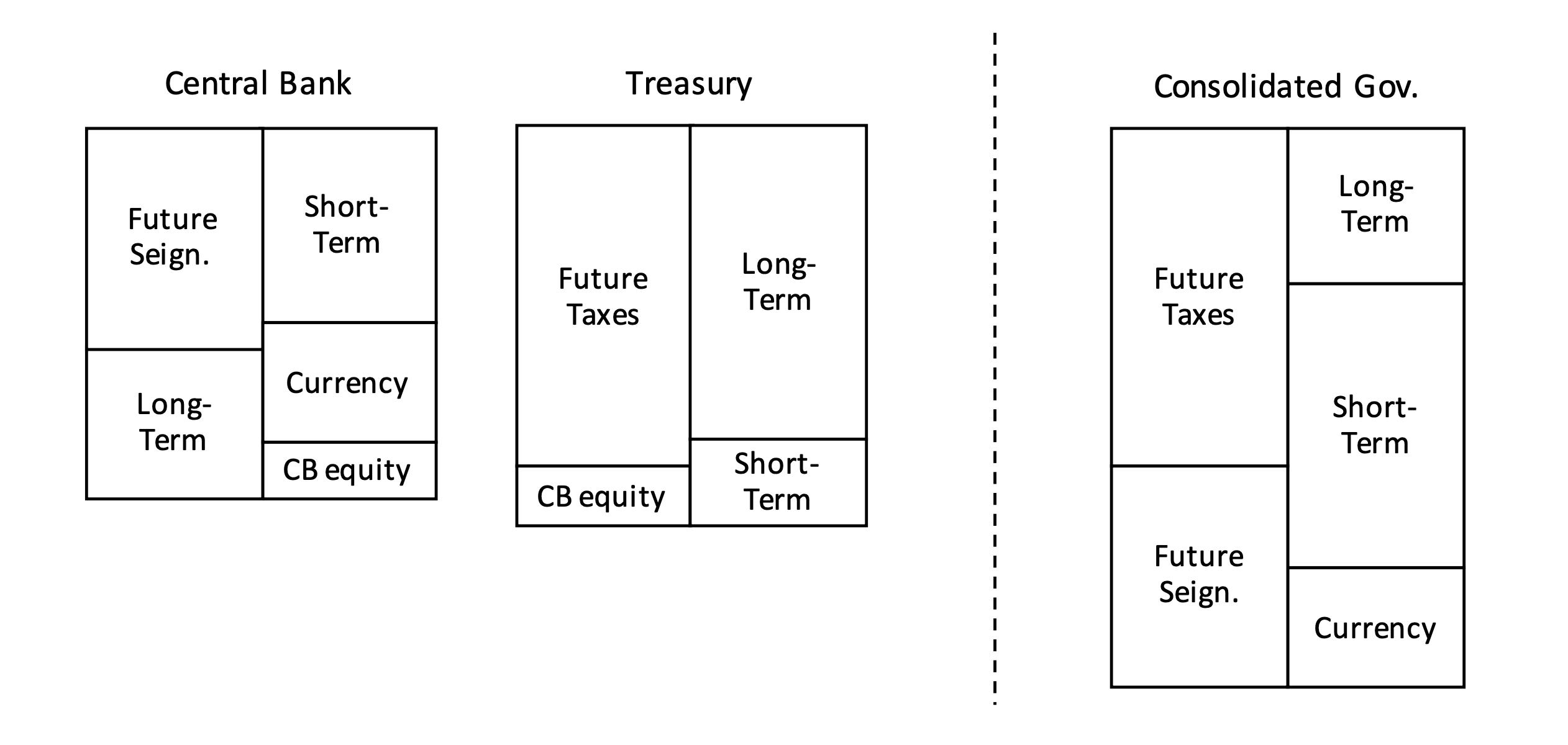
Abstract: Quantitative easing (QE) shortens the duration of the consolidated public balance sheet by swapping long-term government bonds for short, floating-rate liabilities, thereby shifting interest-rate risk onto taxpayers. In segmented bond markets, absorbing duration from the marginal investor can support real activity, but it also generates state-contingent losses that must be financed with distortionary taxes. We quantify the resulting ex ante fiscal-efficiency cost by forecasting QE-portfolio return distributions and mapping these into expected tax deadweight losses under a conservative terminal financing rule. Across all recent U.S. QE programs, the expected costs total 0.35% of GDP under risk-neutral valuation and 1.35% of GDP as a conservative upper bound. At origination, published estimates of QE output effects exceed our estimated fiscal-efficiency costs for each U.S. QE program.