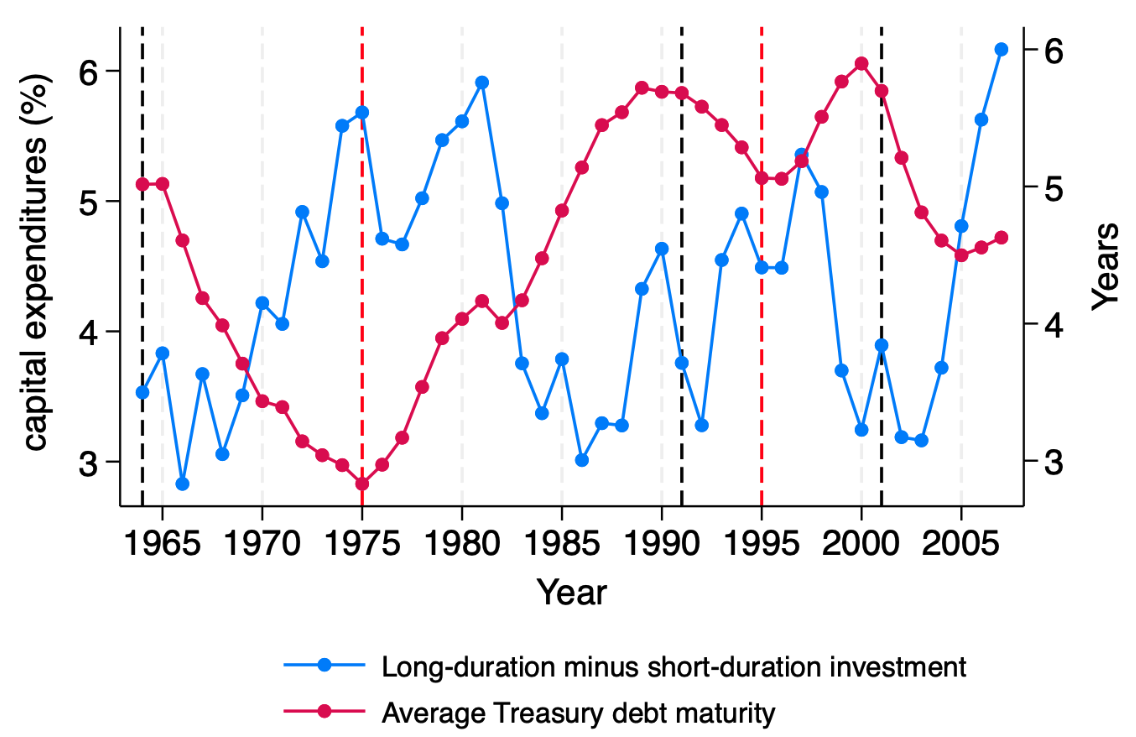
Abstract: Using large, plausibly exogenous shocks to the maturity structure of U.S. government debt, I provide the first causal evidence that the supply of long-term government debt affects the duration of corporate investment. I find that an increase in the supply of long-term government debt increases long-term discount rates, crowding out long-duration investment. This crowding-out effect reallocates capital from long-duration investment towards short-duration investment. This reallocation occurs across industries, within industries across firms, and within firms across divisions. I provide evidence that this reallocation depends on investment duration but is independent of firms' capital structure. Due to the prevalence of asset–liability maturity matching, the resulting variation in aggregate investment duration explains a sizable share of the variation in aggregate corporate debt maturity. My findings imply that policies which influence the net supply of long-term bonds, such as public debt management and central bank quantitative easing or tightening, affect the composition of corporate investment.