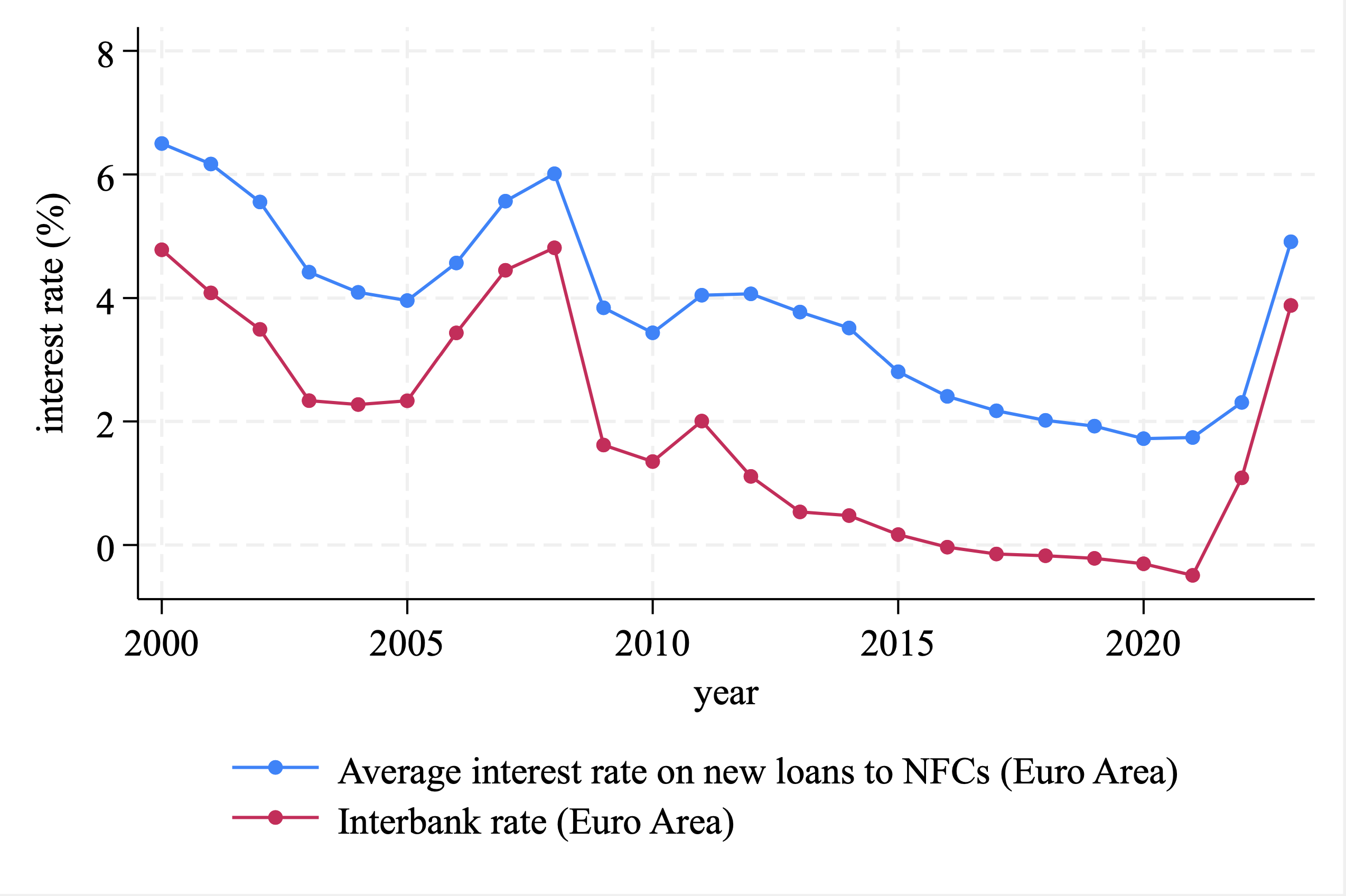
Abstract: We present evidence that loan spreads earned by banks over marketable interest rates are, in the French business lending context, inversely related to the level of short-term interest rates. Controlling for the pricing of credit and interest rate risks, we show that this negative correlation is consistent with a credit supply shock: banks who increase loan spreads more when interest rates decline also experience lower growth in credit supply. We find empirical support for theories that link frictions in the deposit-taking business to lending outcomes of financially constrained banks. Lower rates compress deposit spreads earned by banks, prompting constrained banks to reduce lending, and explaining the rise in loan spreads. We also find support for a complementary channel, lending market power. Specifically, lenders with higher market share and borrowers facing a higher "hold-up problem" are associated with a lower interest rate pass-through. Finally, we provide novel evidence of negative real effects on corporate financing and investment for firms borrowing from banks with lower interest rate pass-through.